
TLDR
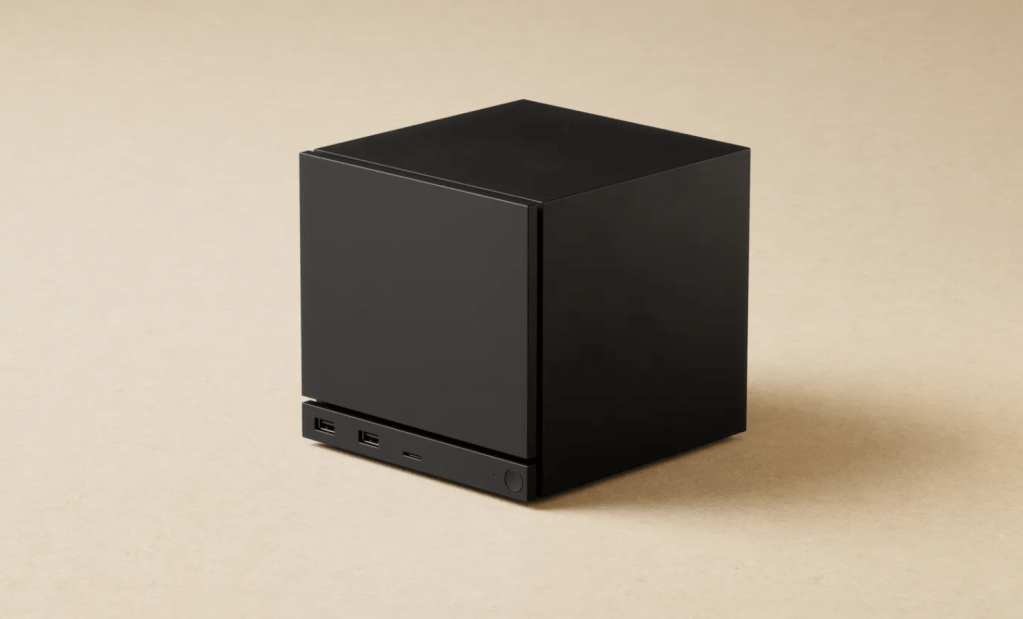
The new Steam Machine looks roughly on par with a PS5 in raw performance and sits below the Xbox Series X in GPU grunt. Its real strengths are PC flexibility, SteamOS and the new controller. Its biggest question marks are the 8 GB VRAM on the GPU, media app support and whatever price Valve eventually picks.
Steam Machine vs Xbox Series X vs PS5: which box should live under your TV?
Valve has finally done it. After years of hinting, they have created a proper living room Steam box again. The 2015 attempts were aborted. However, the surprise success of Steam Deck paved the way.
For this piece I wanted to round up the early hands on coverage from across the web and answer one simple question:
How does the new Steam Machine stack up against the Xbox Series X and PS5?
To reach our goal, we will combine impressions and specs from various sources. These include places like The Verge, Digital Foundry, PCWorld, Polygon, and more. (The Verge)
Specs at a glance
This is where a lot of people will start, so let us get the headline numbers out of the way first.
Core hardware comparison
| Spec | Steam Machine | Xbox Series X | PlayStation 5 |
|---|---|---|---|
| CPU | Custom AMD Zen 4, 6 cores / 12 threads, up to 4.8 GHz (The Verge) | Custom AMD Zen 2, 8 cores, up to 3.8 GHz (Xbox.com) | Custom AMD Zen 2, 8 cores, up to 3.5 GHz (PlayStation.Blog) |
| GPU | Semi custom RDNA 3, 28 CUs, up to ~2.45 GHz, 8 GB GDDR6 VRAM (The Verge) | Custom RDNA 2, 52 CUs @ 1.825 GHz, 12.1 TFLOPs (Xbox.com) | Custom RDNA 2, 36 CUs up to 2.23 GHz, 10.3 TFLOPs (PlayStation.Blog) |
| Memory / VRAM | 16 GB DDR5 system RAM + 8 GB GDDR6 VRAM on GPU (consolegames.ro) | 16 GB GDDR6 unified (10 GB high bandwidth + 6 GB lower) (Xbox.com) | 16 GB GDDR6 unified (PlayStation.Blog) |
| Storage (base) | 512 GB or 2 TB NVMe SSD + high speed microSD slot (PCWorld) | 1 TB NVMe SSD + proprietary expansion slot (Xbox.com) | 825 GB custom NVMe SSD (newer models 1 TB) + user M.2 slot (PlayStation.Blog) |
| Target performance | 4K gaming at 60 fps using AMD FSR upscaling, depends heavily on settings (PCWorld) | 4K at 60 fps, up to 120 Hz in many titles (Xbox.com) | 4K at 60 fps, up to 120 Hz, strong I/O focus (PlayStation.Blog) |
On paper, Xbox still has the biggest GPU. Sony and Microsoft both give games a full 16 GB of GDDR6 to play with. Valve is trying to keep up using a newer CPU plus upscaling tricks.
What the numbers actually mean
CPU: a newer brain in a smaller box
The Steam Machine CPU is a 6 core Zen 4 chip with boost clocks up to 4.8 GHz. (The Verge)
By comparison, both Series X and PS5 use 8 core Zen 2 chips.
In practice:
- For CPU heavy games and emulators, the newer Zen 4 cores can make up a lot of ground despite the lower core count. It is not a slam dunk win everywhere, but it is respectable.
- For high refresh multiplayer where you care about 120 fps and solid frame times, that newer architecture in a fixed spec box should age quite well.
So if you look only at CPU, Steam Machine is no slouch.
GPU and VRAM: where things get more complicated
The GPU is where the story tilts back towards Xbox and Sony.
Digital Foundry describes the Steam Machine as a cube sized PC that pairs a semi custom RDNA 3 GPU with 8 GB of GDDR6 VRAM, essentially a mid range laptop or desktop GPU updated for the living room. (Digital Foundry)
“Price will be all important… only having an 8GB VRAM option is disappointing.” (Digital Foundry)
The Xbox Series X and PS5 both give developers a unified 16 GB GDDR6 pool. That matters because:
- At 1080p or 1440p, 8 GB VRAM is still fine for most titles today.
- At 4K with high textures and ray tracing, 8 GB can get tight quickly, especially two or three years from now.
Valve is banking on:
- RDNA 3 efficiency
- FSR upscaling doing the heavy lifting at high resolutions
- And careful optimisation in SteamOS and Proton to keep overheads low. (Digital Foundry)
The upshot is:
- Expect the Steam Machine to shine at 1080p and 1440p with high settings.
- At 4K on a big TV, you are more likely to be running a mix of medium and high settings with FSR, rather than pure native 4K at high or ultra.
That is closer to PS5 territory than Series X, with the caveat that PS5 titles are heavily optimised for that exact hardware.
Early performance impressions from hands on coverage
We have already seen some early benchmarks and hands on time from press.
Cyberpunk and other heavy hitters
Digital Foundry and The Verge both tested Cyberpunk 2077 on Steam Machine: (Digital Foundry)
“On a 4K TV, the demanding Cyberpunk 2077 benchmark averaged a smooth 65fps at medium settings with basic ray tracing turned on, upscaled from 1080p with FSR.” (The Verge)
That is not bad at all for a 6 inch cube under your telly, but it is not a magical 4K ultra box either. Native 4K without upscaling dropped into the mid 20s.
PCWorld frames it as a “tiny living room PC version of the Steam Deck” that can handle 4K60 with FSR, which feels like the right mental model. (PCWorld)
“You can expect console level power in a wee little package.” (PCWorld)
So the pattern emerging from early tests:
- Yes to 4K60 in a lot of titles with upscaling and sensible settings.
- No to expecting uncompromised 4K ultra with heavy ray tracing in the biggest AAA games.
- VRR support helps smooth out the dips if your TV supports it. (Digital Foundry)
Versus Series X and PS5, that is basically:
- Stronger than last gen high end consoles like One X and PS4 Pro.
- In the same ballpark as PS5 overall.
- Behind Series X in brute GPU power and VRAM headroom.
SteamOS, Proton and the console versus PC experience
The other half of this story lives in software.
A console that thinks it is a PC
Steam Machine runs SteamOS 3, Valve’s Linux based OS, with Proton translating Windows games under the hood. (The Verge)
If you know the Steam Deck story, you know the pitch:
“Linux now runs Windows games better than Windows” for a lot of Deck owners. (The Verge)
Valve is also expanding the Steam Verified programme with a new Steam Machine badge, so you will be able to see at a glance which games are tested and approved for this exact hardware and controller. (Digital Foundry)
That is a huge step up from the original 2015 Steam Machines.
Media apps and the all in one living room box problem
Here is where the console comparison gets harsh.
Digital Foundry highlights a big limitation if you want this to replace every box under your TV: (Digital Foundry)
“Valve has no plans to offer bespoke media streaming apps via SteamOS. Your favourite streaming service will need to work in a Linux browser.” (Digital Foundry)
Some streaming services simply block Linux browsers for DRM reasons today. On Xbox and PS5, you just install the native Netflix, Disney Plus or whatever and you are done.
So:
- As a dedicated games console, Series X and PS5 still win on simplicity and media support.
- As a living room PC, Steam Machine is massively more flexible. You can install other launchers, emulators, mod tools, general PC apps and so on, if you are willing to tinker a bit.
Whether that is a plus or a minus depends entirely on what you want out of the box.
Controllers: three very different takes
All three platforms now have genuinely interesting controllers, just with different priorities.
The new Steam Controller
This is Valve’s second shot at a pad after the original trackpad heavy Steam Controller.
The new one is closer to a “normal” gamepad, with:
- Two sticks
- D pad and face buttons
- Triggers and shoulder buttons
- Back grip buttons
- Two trackpads for mouse like input
- Gyro with a “Grip Sense” function that turns gyro on only when you squeeze the grips (Digital Foundry)
Valve has also moved to TMR hall effect sticks to reduce stick drift and dead zones, which is a nice long term durability play. (Digital Foundry)
“Exactly what I dreamt of when I imagined a new Steam Controller. So pumped.” (Digital Foundry)
From the early impressions, it sounds like:
- A very solid default pad for the box
- A great halfway house between controller and mouse for genres that prefer pointer precision
- Not something you are forced into; Steam Machine will happily talk to Xbox and DualSense pads too
DualSense and the Xbox pad
By contrast:
- DualSense still has the most interesting immersion tricks: haptics, adaptive triggers and tight integration in Sony first party games. (Wikipedia)
- The Xbox Wireless Controller remains the comfort food of gamepads. It is supported in almost everything, including SteamOS.
If you mostly play multiplatform games, the gamepad situation alone probably will not sway you either way, but it does show you how different these three platforms are trying to be.
Design, noise and upgradability
The cube in the cabinet
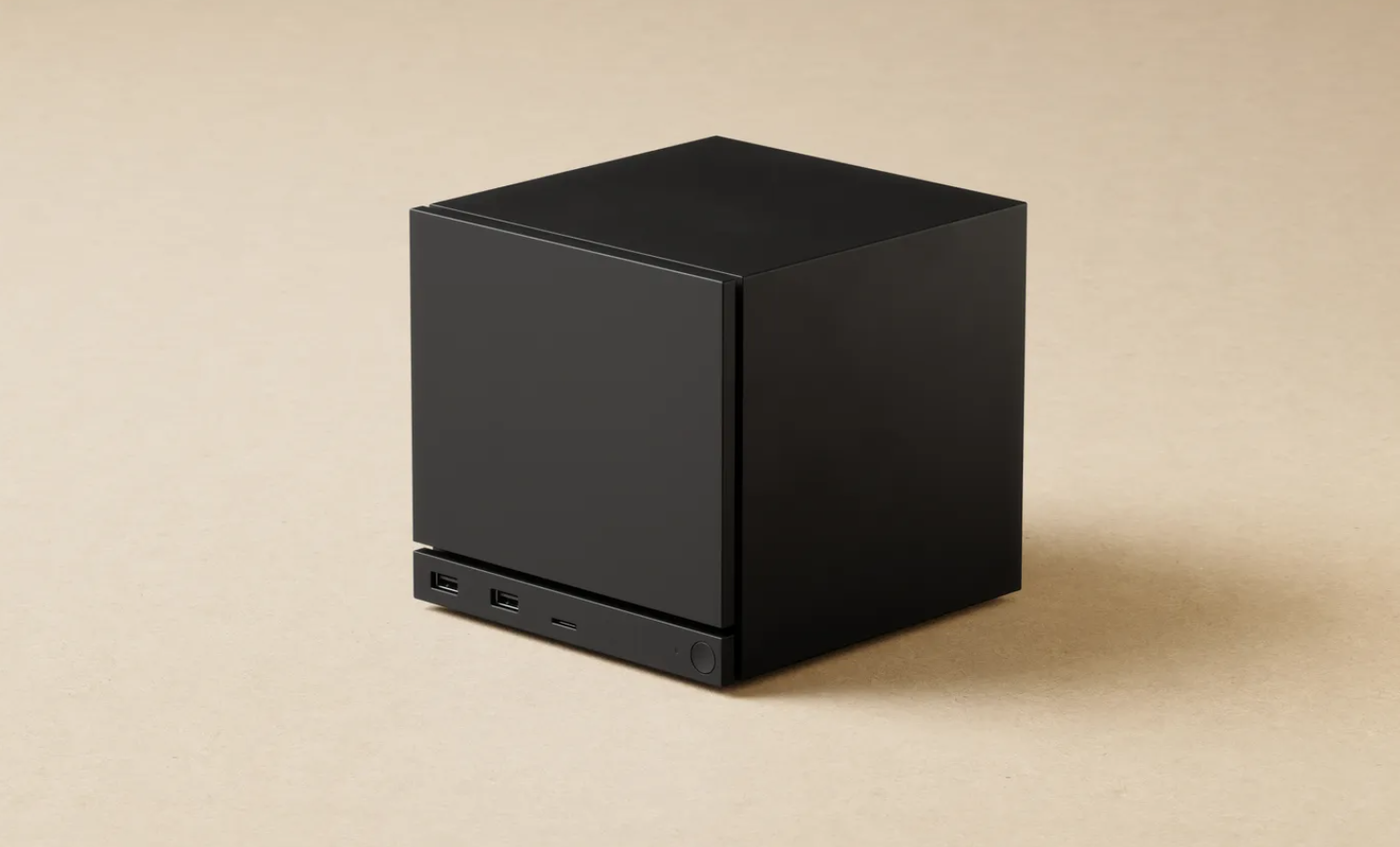
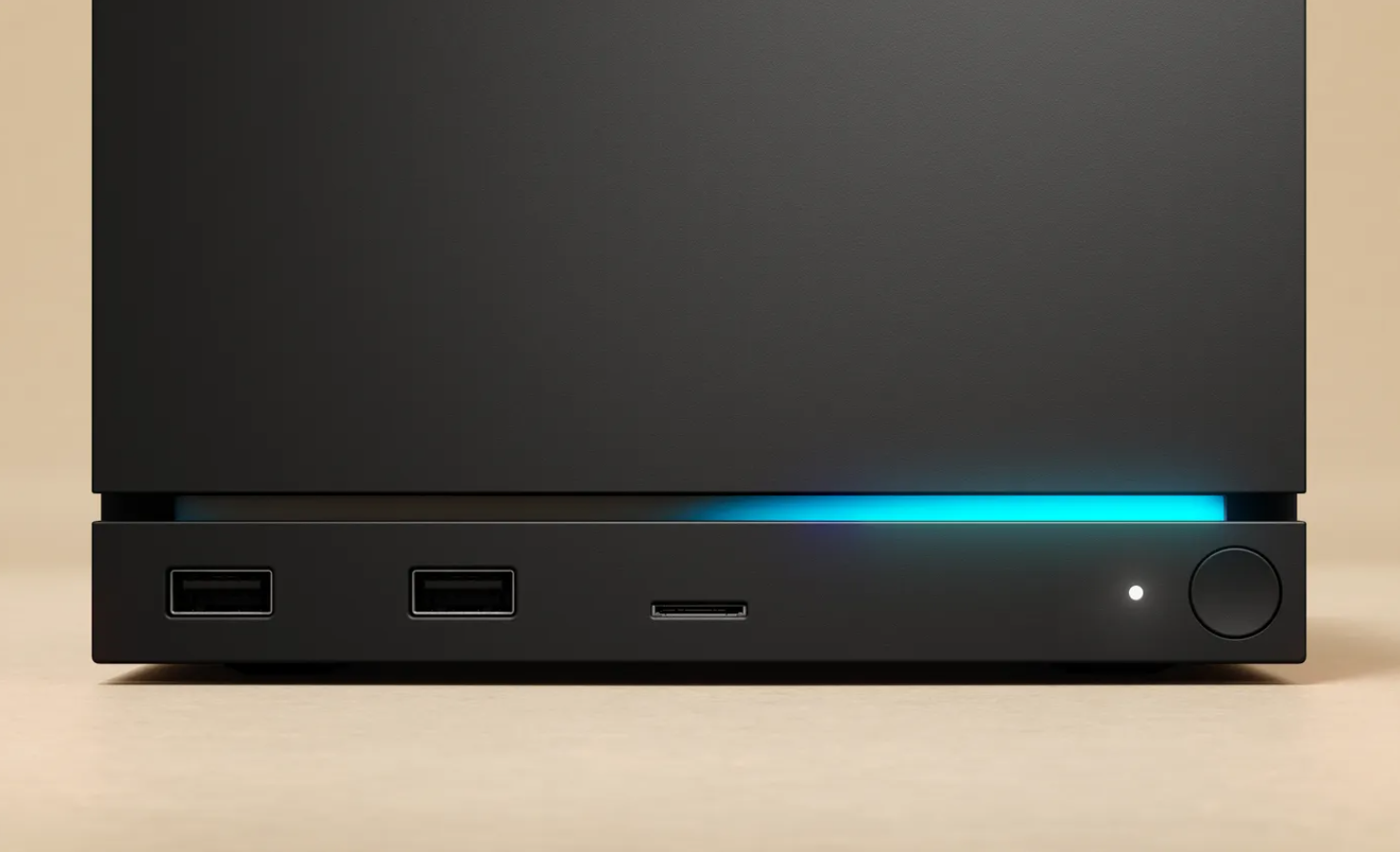
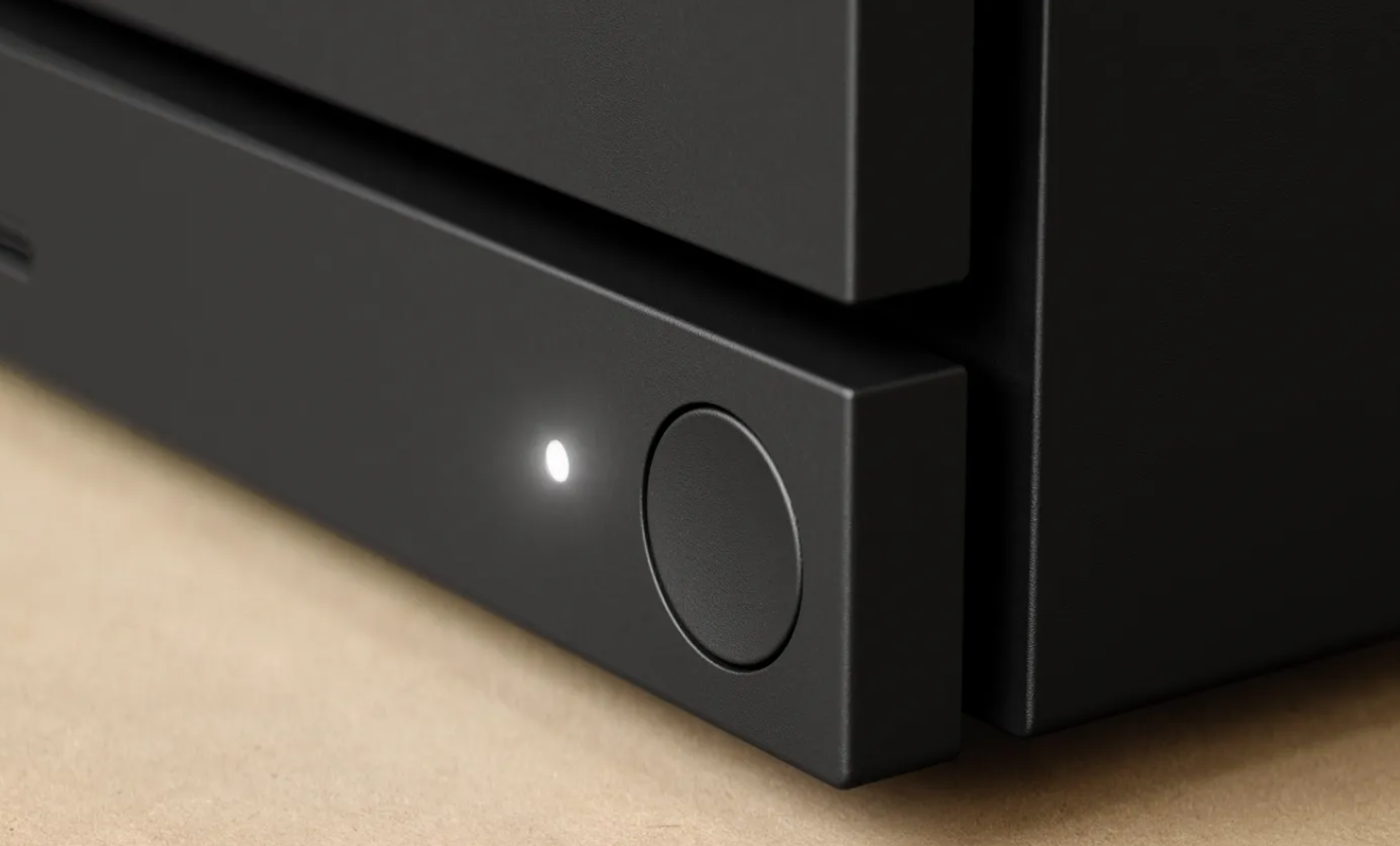
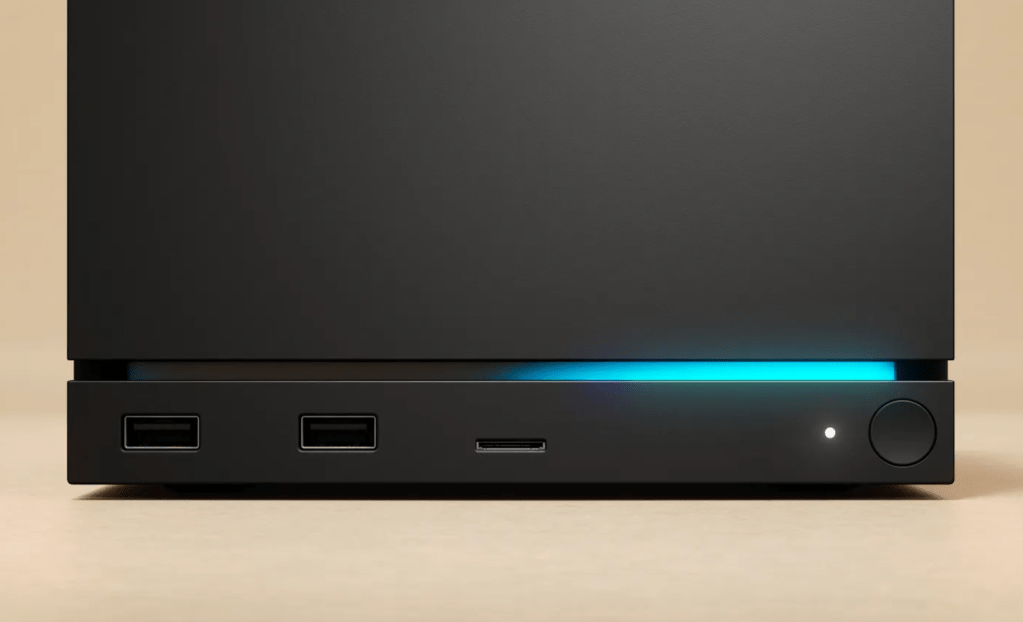
Multiple outlets describe Steam Machine as a small cube that is basically a chopped down Xbox Series X. (Digital Foundry)
Polygon goes further and compares the aesthetic playbook to Nintendo’s GameCube era, with colourful faceplates and a cute footprint. (Polygon)
Inside, though, it is all about cooling:
“We probably have more computational fluid dynamics time on this than an F1 team in a calendar year.” (The Verge)
Digital Foundry notes that around 70 percent of the internal volume is basically one big thermal module, designed to cope with closed TV cabinets and low airflow scenarios. (Digital Foundry)
User accessible bits
Where Steam Machine really pulls away from the consoles is upgradability.
Valve and Digital Foundry both confirm that: (Digital Foundry)
- The M.2 SSD is user replaceable, and supports both short 2230 and standard 2280 drives.
- The SODIMM RAM modules are also removable, though trickier to get to.
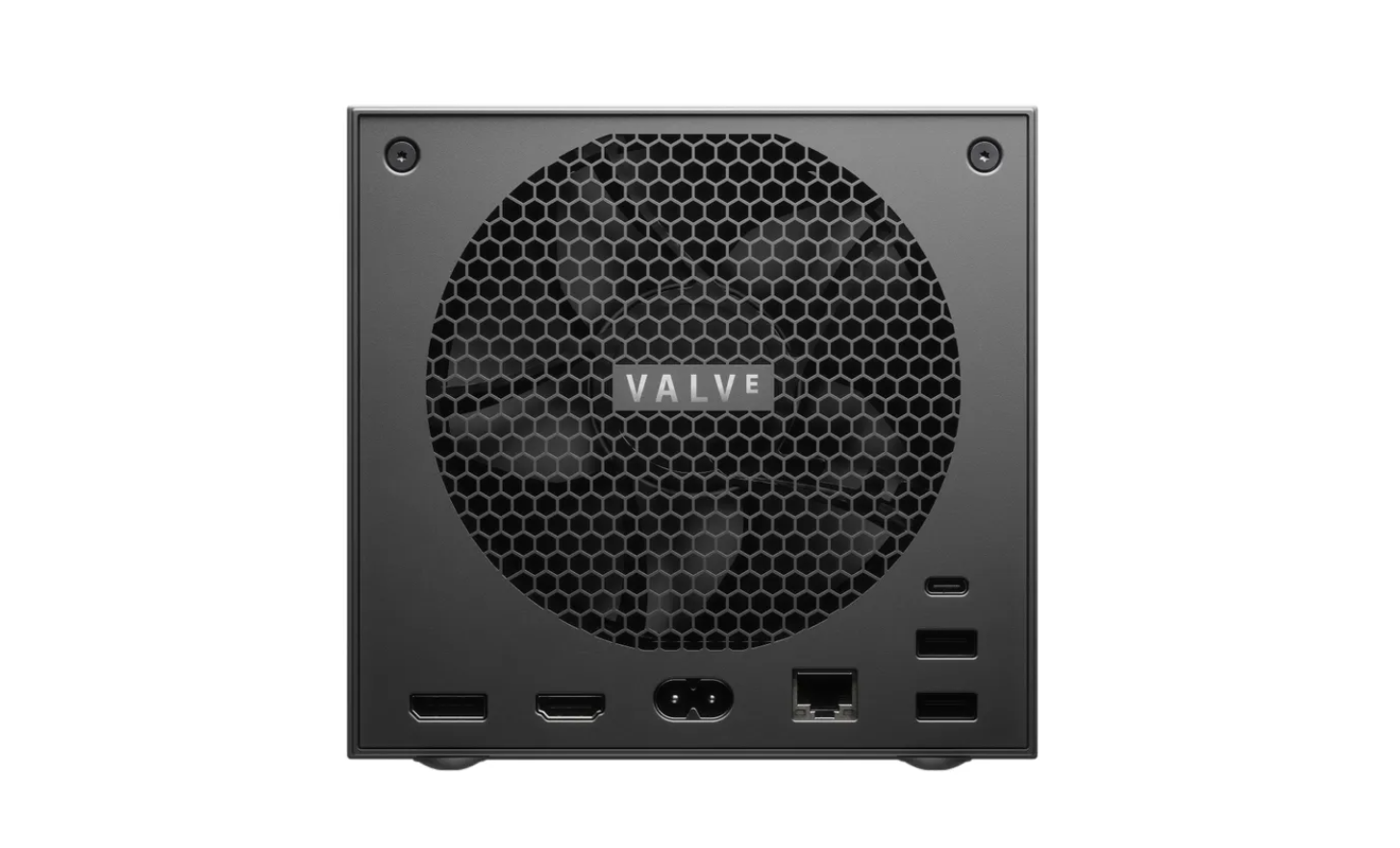
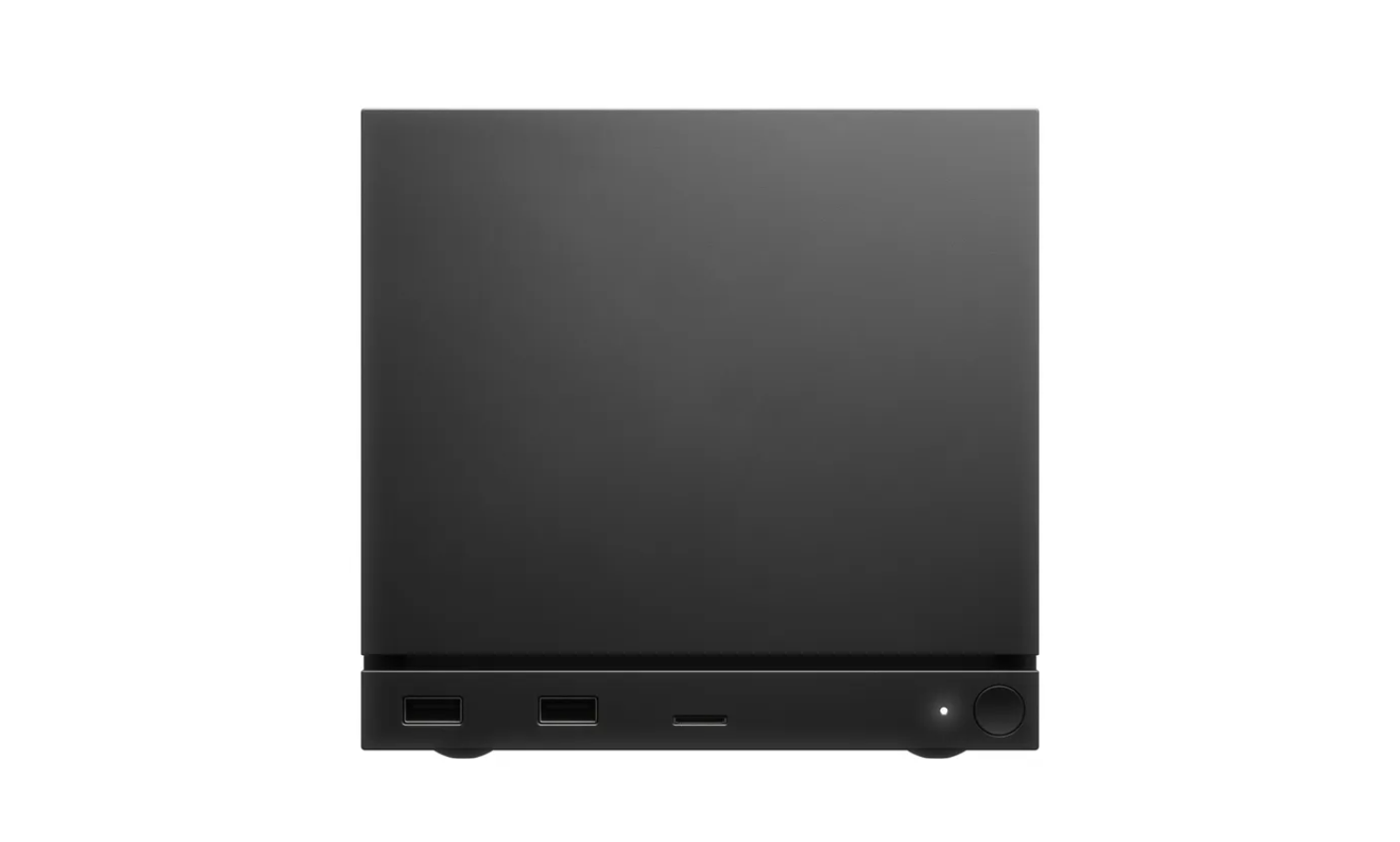
- There is a fast microSD slot on the front for extra storage or hot swapping cards with your Steam Deck.
GPU and CPU are fixed, so this is not a fully modular mini PC, but compared to Xbox and PS5 this is much more user friendly if you like to tweak.
Price and positioning: the big unknown
The awkward truth is that value comparisons are hard until Valve reveals a price.
Right now, all we know from The Verge, PCWorld and Digital Foundry is: (The Verge)
- Launch is planned for early 2026.
- There are two SKUs at 512 GB and 2 TB.
- Pricing will be more like an “entry level PC” than a straight console match according to hints relayed via press and community coverage. (Digital Foundry)
If it lands roughly around current Series X and PS5 pricing, then:
- You are trading a bit of top end GPU horsepower and plug and play media apps
- For a more flexible platform that can behave like a PC when you want it to
If it comes in significantly higher, it will start to compete with small form factor gaming PCs and stand alone GPUs, and the fixed 8 GB VRAM will feel more like a compromise.
So which box should you actually buy?
Here is where I would land based on everything we know today.
Get a Steam Machine if…
- You already live in Steam and like PC style libraries, modding and sales.
- You want a couch PC that hides the complexity most of the time.
- You are happy with 1080p or 1440p as your main targets and view 4K as a nice bonus when it works.
- You are comfortable occasionally tweaking graphics settings or dealing with the odd Proton quirk.
Get an Xbox Series X if…
- You want maximum brute force in a console form factor, plus:
- Game Pass
- Strong backward compatibility
- Simple media app support (Xbox.com)
- You prefer the Xbox ecosystem and services.
Get a PS5 if…
- You care most about Sony’s first party exclusives, DualSense features and 3D audio. (PlayStation.Blog)
- You want something that feels very high end on a 4K TV, with almost zero tinkering.
Final thoughts
Valve’s new Steam Machine is much more convincing than its 2015 namesake. This time it is:
- A single fixed spec box, not a vague spec target.
- Built on the proven foundations of Steam Deck, SteamOS and Proton.
- Paired with a genuinely interesting controller and a clear story about why it exists.
It is not a straight “Series X killer” and it is not quite a PS5 Pro competitor either. It is its own thing: a tiny living room PC that aims to bring your Steam library and a lot of PC flexibility to the TV without dragging a whole Windows desktop in behind it.
Whether that is enough will probably come down to two numbers at launch: the price on the store page and the “Recommended” resolution you are happy to live with.
Sources and further reading
Here are the main pieces referenced in this roundup if you want to dive deeper:
- The Verge – Our first look at the Steam Machine, Valve’s ambitious new game console (The Verge)
https://www.theverge.com/tech/818111/valve-steam-machine-hands-on-preview-specs-announcement - Digital Foundry – Hands on with Steam Machine: Valve’s new PC/console hybrid (Digital Foundry)
https://www.digitalfoundry.net/features/hands-on-with-steam-machine-valves-new-pcconsole-hybrid - PCWorld – Valve’s new Steam Machine is ‘6x more powerful than the Steam Deck’ (PCWorld)
https://www.pcworld.com/article/2970274/valves-new-steam-machine-is-6x-more-powerful-than-the-steam-deck.html - Polygon – Valve announces new Steam Machine, Steam Frame headset, and Steam Controller (Polygon)
https://www.polygon.com/valve-new-hardware-steam-machine-frame-controller/ - Polygon – Valve is following the Nintendo hardware playbook, and it is working (Steam Machine design and faceplates) (Polygon)
https://www.polygon.com/valve-steam-machine-cube-design-nintendo-gamecube-size/ - Thurrott – Valve Announces New Steam Machine, Steam Frame Headset, and Steam Controller (Thurrott.com)
https://www.thurrott.com/games/329529/valve-announces-new-steam-machine-steam-frame-headset-and-steam-controller - Reddit – Announcing new Steam Hardware: Steam Machine, Steam Frame, Steam Controller (Steam Machine Verified details) (Reddit)
https://www.reddit.com/r/gaming/comments/1ovci11/valve_officially_announces_steam_hardware_home/ - Xbox – Xbox Series X official spec page (Xbox.com)
https://www.xbox.com/en-GB/consoles/xbox-series-x
https://news.xbox.com/en-us/2020/03/16/xbox-series-x-tech/ - PlayStation – Unveiling new details of PlayStation 5: hardware technical specs (PlayStation.Blog)
https://blog.playstation.com/2020/03/18/unveiling-new-details-of-playstation-5-hardware-technical-specs/ - TechRadar – PS5 vs Xbox Series X: which current gen console should you buy? (TechRadar)
https://www.techradar.com/news/ps5-vs-xbox-series-x-which-next-gen-console-should-you-buy

 Twice the bits
Leave a comment