
Lets Get Physical
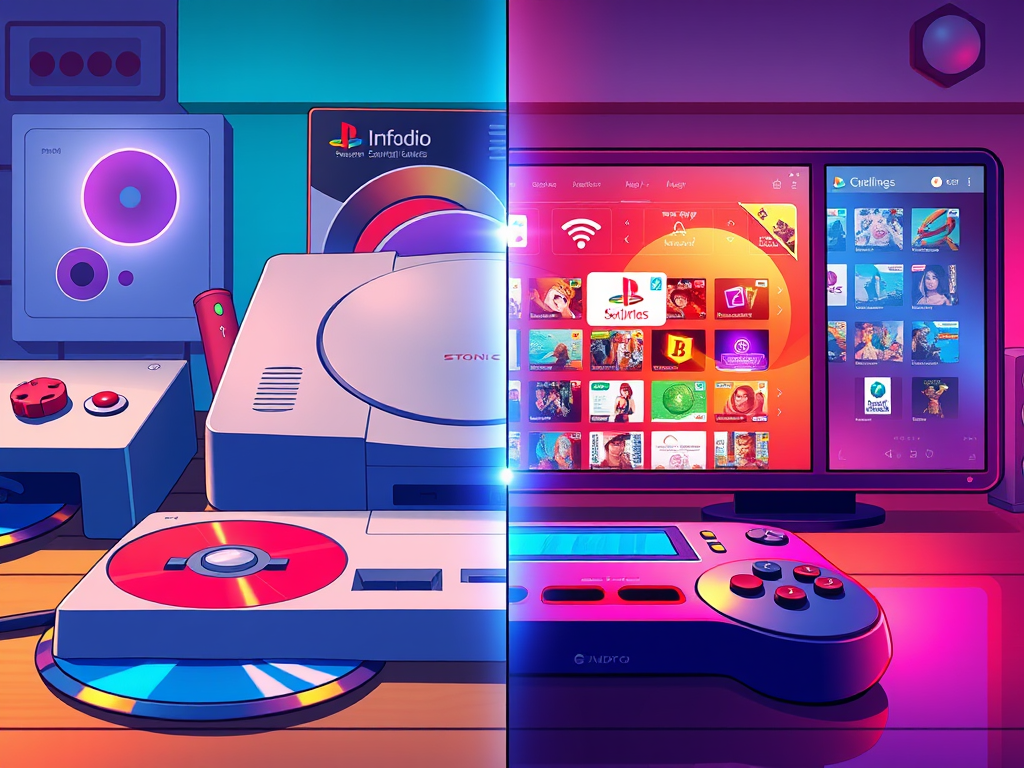
Physical video game sales have been on a sharp decline as gamers increasingly embrace downloads and streaming. In 2023, an estimated 83% of console games were sold as digital copies, leaving a mere 17% on physical discs. If we include PC games (which are almost entirely digital now), about 95% of all games sold are digital. This seismic shift has unfolded over the past few console generations, fundamentally changing how we buy and play games. Below, we explore how physical copies have decreased with each generation of PlayStation and Xbox consoles, what factors have driven this change, and how it mirrors trends in music and film.
Console Generations: From Discs to Digital Downloads
PlayStation and Xbox Console Generations vs. Physical Media
To understand the decline of physical game media, it’s useful to look at each console generation and the balance between disc-based games and digital distribution:
| Generation (Era) | PlayStation | Xbox | Physical vs. Digital Distribution |
|---|---|---|---|
| 5th Gen (mid-1990s) | PlayStation (PS1, 1994) | No Xbox | Nearly 100% physical (cartridges/CDs). No digital storefronts yet. |
| 6th Gen (2000–2005) | PlayStation 2 (2000) | Xbox (2001) | ~100% physical. Games shipped on DVD/CD; online services were minimal or limited to multiplayer. |
| 7th Gen (2005–2013) | PlayStation 3 (2006) | Xbox 360 (2005) | Physical still dominant. Digital storefronts (PSN, Xbox Live) introduced. By 2013, full-game downloads were <20%. |
| 8th Gen (2013–2020) | PlayStation 4 (2013) | Xbox One (2013) | Digital rising fast. PSN and Xbox Store matured. Digital overtook physical around 2018–2019. Xbox One S All-Digital launched (2019). |
| 9th Gen (2020–present) | PlayStation 5 (2020) | Xbox Series X / Series S (2020) | Digital dominant. PS5 Digital Edition and Xbox Series S launched with no disc drives. By 2023, digital made up ~83% of console game sales; boxed games <20%. |
As shown above, the 7th generation introduced online stores but physical media still reigned. On the 8th generation consoles, digital distribution gathered steam, particularly after around 2015. Sony’s own data shows full-game downloads on PlayStation jumped from only 19% of sales in 2015 to 70% by 2022. (In fact, Sony just reported the digital download ratio reached 76% in FY2024, up from 70% the year prior.) The 9th generation has cemented digital as the default: by 2023, only 17% of console games worldwide were sold on physical media.
Crucially, console makers responded to this trend and helped accelerate it. In 2020 Sony and Microsoft both offered diskless hardware options at launch – a first for home consoles. The PS5 Digital Edition and the Xbox Series S come without disc drives, pushing buyers toward online storefronts. It’s a marked contrast to earlier eras: for example, in 2009 Sony tried releasing a PSP Go handheld with no UMD disc drive, but it flopped at the time. Consumers then were not ready to give up physical games, and Sony hadn’t built a strong enough digital library. Fast forward to today, and digital libraries are the norm – the success of disc-free consoles now “better [serves] both publishers and consumers,” as one industry analyst noted, with physical formats likely to persist only as “premium collector’s items” in the future.
Why Gamers (and the Industry) Are Going Digital
Several key factors have driven the shift from physical discs to digital game sales:
- Convenience & Instant Access: Buying games digitally means no waiting for shipments or trips to the store. Players can purchase and download a game from their couch and start playing immediately (aside from download time). There’s no disc swapping between games, and your library travels with you on your account. This convenience has been a big pull: as one gamer put it, “Not having to wait days to ship something or find time to go out is definitely a solid plus”. Over time, gamers have simply become more comfortable with downloads and updates as a routine part of gaming.
- Faster Internet & Larger Storage: The rise of broadband internet and affordable hard drives made downloading huge games feasible. Back in 2005, a DVD held everything you needed; today, even physical discs often require massive day-one patches. Since modern consoles are always online for updates anyway, many players find it easier to just get the whole game online. The infrastructure (Wi-Fi speeds, etc.) has caught up to make digital viable for the masses.
- Online-Only Content & Sales: Some games or special editions are only available digitally. Frequent online store sales and discounts (like Steam sales or PlayStation Store deals) have lured cost-conscious gamers to digital libraries. Platforms often run deep discounts on older titles that undercut used physical copy prices. The growth of free-to-play games and in-game purchases (which are inherently digital) further shifted spending away from boxed games.
- Publishers’ Preference & Cost: Game publishers save on manufacturing, packaging, and retail middlemen with digital distribution. They often earn higher margins per unit sold digitally. This, in turn, encourages more digital releases or even digital-only launches. For example, Remedy Entertainment announced Alan Wake 2 would be digital-only, explaining that “many players had already shifted to only buying games digitally, so [we] wanted to ensure the game maintains a low price” and avoid the extra steps associated with discs. By skipping discs, developers can also update games more flexibly and even polish closer to release day (since they don’t need to “go gold” for disc printing months in advance). In short, digital distribution is often more efficient for creators.
- Subscriptions and Streaming Services: The industry has seen a boom in Netflix-style gaming services that don’t use physical media at all. Services like Xbox Game Pass, PlayStation Plus, and cloud streaming platforms let players access large catalogs instantly. The growing popularity of subscription access to games has been a major factor cutting into physical sales. Why buy individual discs when you can download or stream 100+ games from a subscription? This trend mirrors what happened in music and video (e.g. Spotify, Netflix) – access replaces ownership of physical items.
- Retail Decline and Availability: Brick-and-mortar game retailers have dwindled or shifted focus. In the UK, for instance, the last major game chain (GAME) has reduced shelf space and even stopped pre-orders and pre-owned game sales. In the U.S., big retailers devote far less space to game discs than in years past, and some have made striking moves – Best Buy will stop selling DVDs and Blu-ray discs entirely in 2024, having already phased out music CDs back in 2018. With fewer stores carrying a wide selection of titles, many consumers find it simpler to buy digitally than to hunt for a physical copy. (Indeed, as stores prioritize electronics and digital devices, one journalist wryly noted, “there are still physical video games, but that might not even last as companies like Sony and Microsoft evolve systems to focus on digital distribution”.)
- Pandemic Acceleration: The COVID-19 pandemic in 2020 gave a one-time jolt to digital adoption. During lockdowns, buying games online was often the only option. Sony observed that this “accelerated the already existing shift to digital”, pushing PlayStation’s digital ratio to new heights. Even after stores reopened, many gamers had gotten used to digital purchases.
These factors feed into each other. It’s a bit of a “chicken and egg” scenario: as more players went digital, console makers felt confident releasing disc-less devices; and as those digital-only consoles sold (often at a lower price point), they further drove digital storefront sales. Over the last few years we’ve seen this feedback loop effectively flip the default. Microsoft, for example, has signaled an intent to go all-digital in the future – the Xbox Series S (no disc drive) has been a key part of its strategy, and even marquee upcoming titles like Hellblade 2 are planned as digital-only releases. Sony, while still supporting discs on PS5, has nearly equalized its physical vs digital first-party game sales and even introduced a new PS5 model with a detachable (optional) disc drive in 2023. The direction from both major players is clear.
Beyond Gaming: Entertainment’s Broader Shift from Physical to Digital
The move away from physical media isn’t unique to video games – it’s part of a wider trend across all forms of entertainment. Consumers worldwide have been trading shelves of discs and cartridges for digital libraries and streams:
- PC Gaming Paved the Way: Long before console gamers embraced downloads, PC gamers shifted to digital. Valve’s Steam store launched in 2003 and by the 2010s had largely killed off physical PC game sales. By 2023, a staggering 99% of PC game units were sold digitally. PC game boxes (once a staple of electronics stores) are now rare collectibles. This early transition on PC helped normalize the idea of digital game ownership and platforms, which console manufacturers later adopted.
- Music Industry – From CDs to Streaming: The music business provides a dramatic parallel. In the early 2000s, physical CDs dominated. But with the rise of iTunes and then streaming services like Spotify, physical music sales plunged. As of 2023, 84% of U.S. music industry revenue comes from streaming platforms, while physical formats (CDs, vinyl) make up only 11%. In the UK, recorded music revenue has rebounded to early-2000s levels entirely due to digital growth, even as CD sales remain a niche (vinyl has had a small revival among collectors, but it’s relatively minor). The way people consume music has fundamentally changed: access on-demand is valued over owning a plastic disc. Gamers are undergoing a similar change in mindset regarding game discs.
- Film/TV – The Streaming Era: The film and television sector likewise has seen DVDs and Blu-rays give way to Netflix, Disney+, and other streaming services. In the U.S., streaming accounts for about 86% of home video revenue, while physical video (DVD/Blu-ray sales and rentals) is now under 4% of the market. Major retailers ending sales of movie discs (as mentioned with Best Buy) highlight how far the pendulum has swung. Even for those who still value high-quality Blu-ray, the convenience of streaming and the breadth of content online have vastly reduced the demand for physical video media. Cable cutting and on-demand streaming also mirror the on-demand, instant-access model that game downloads and cloud gaming provide.
- Other Media: Books and print have e-books and digital subscriptions; photography moved from film rolls to digital images. The consistent theme is digital distribution enabling instant access, often at lower cost, gradually eroding physical media markets. In gaming, we also see new distribution models like cloud gaming (e.g. Xbox Cloud Gaming, Nvidia GeForce Now) where you don’t even download the game – you stream gameplay from a server. This is still emerging, but it points toward a future where even owning digital files might be secondary to simply having online access to games on any device.
In all cases, once digital infrastructure and consumer habits reach a tipping point, the economics shift decisively. Physical media sales for games have not just declined slowly – in some regions they’ve collapsed. UK data shows boxed game sales in 2024 fell by 35% year-on-year, now representing just 10.4% of new game sales in the UK. The U.S. tells a similar story: physical game spending in 2024 was 85% below its 2008 peak (when Gamestop and DVDs were still king). According to NPD’s Mat Piscatella, the decline even accelerated in 2024 as more consumers fully transitioned to digital purchasing. This is happening even though overall gaming revenue is holding steady or growing – meaning people aren’t buying fewer games, they’re just overwhelmingly buying them digitally.
The Road Ahead: A Physical Niche in a Digital World
It’s unlikely that physical game media will disappear entirely in the immediate future, but it’s becoming a niche market aimed at enthusiasts, collectors, and regions with limited internet. Collector’s editions and retro re-releases on cartridge/disc will still attract hardcore fans who value a tangible product. And certain console ecosystems (Nintendo, for example) have historically maintained a higher ratio of physical sales, partly due to family-oriented consumers and the gifting culture of cartridge games. The upcoming Switch 2 (as analysts speculate) might temporarily boost physical sales if it sticks with cartridges. But even Nintendo has a robust eShop and could offer a digital-only device down the line.
For the mainstream, all signs point toward an all-digital (or cloud-based) future. Industry voices acknowledge this reality. “Boxed games won’t disappear entirely but are unlikely to regain their former market position,” says NYU games professor Joost van Dreunen, noting that digital distribution models “better serve both publishers and consumers.” He predicts physical formats will survive mainly as collector’s items or in markets where digital infrastructure is still developing, representing an “increasingly niche segment of the market.” In other words, the era of buying a disc at retail is fading into the rearview mirror, much as buying a music CD or a DVD has for most people.
Gaming is following the path of music and movies – physical media is giving way to digital libraries and subscription platforms. From the era of blowing into N64 cartridges to fix them, we’ve moved to an era of instant downloads and cloud saves. It’s a transformation driven by convenience, economics, and technological progress, and it has fundamentally changed the business of games. For consumers and developers alike, there are clear benefits: easier access, no physical manufacturing costs, and new ways to enjoy content. Yet there are also conversations sparked by this shift – about ownership rights, game preservation, and the nostalgia for a boxed game collection. Those debates will continue, but the sales numbers tell a stark story of a one-way momentum.
In the context of entertainment at large, gaming’s digital transition is part of a broader digital revolution. The decline of physical game media is not happening in isolation – it’s in step with the way we now consume music, film, and more. For a gaming website like TwiceTheBits, this trend is a crucial piece of the industry’s evolution to watch. From each console generation to the next, physical media’s presence has diminished. We are now at the point where each new console or service is designed primarily around digital content delivery. As we look ahead, the question is less about if gaming will go fully digital, and more about when – and what that will mean for the last bastions of discs and cartridges still remaining.
Sources:
- Daniel Ahmad via ThreadReader (Sony Interactive Entertainment financial data)
- Tech4Gamers – Analysis Reveals 83% of Console Games Were Sold Digitally in 2023
- The Guardian – Boxed video game sales collapse in UK as digital revenues flatten (ERA 2024 report)
- The Verge – Best Buy ending physical movie sales (context on physical media decline)
- Exploding Topics – Music Streaming Stats (music industry 84% streaming vs 11% physical)
- Diverse Tech Geek – US home video revenue (86% streaming vs ~3.6% physical video)
- VGChartz – Mat Piscatella on US physical game sales decline (85% below 2008 peak)
- Wikipedia – Alan Wake 2 (Remedy on choosing digital-only release)
- NeoGAF/Tech4Gamers – discussion on PlayStation vs Xbox digital trends


 Twice the bits
Leave a comment