
The announcement
When Windows 11 was announced back in June with a slew of new features and changes undoubtedly the most anticipated feature was the inclusion of Android apps delivered through the Amazon store. An intriguing prospect for sure and one which led to much hyperbolic excitement but looking back, this is surely just another in an extensive line of “Twice the Bits” moment in the tech industry.
With the “leaking” (discovery surely) of the Android sub system for Windows in the Microsoft store I’ve been thinking about who this is for? What are the use cases, and will it be a success? Whatever that means for Microsoft in this instance.
What is the Android sub system for Windows?
Right now there are few details for how this will work but it will require either emulation or the installation of an Android virtual machine in the same manner as the Linux subsystem for Windows. The one thing we do know is that it will use the Amazon store as a delivery mechanism. Whether or not this is transparent to the user and simply delivered through the Windows store, but via an Amazon account, is unknown.
Why Android apps?
To most observers it is perhaps not entirely clear why Microsoft would support Android applications on their own operating system. So if in doubt, follow the money! Could this be a play to generate store revenues by leveraging the vast number of Windows users and monetising them through app purchases on the Amazon store? Looking at some key statistics is easy to see why Microsoft would want a piece of the action.
Android and iOS app revenue reached $111 billion revenue in 2020, a 24 percent increase year-on-year. iOS was responsible for 65 percent of total app revenue in 2020
Games accounted for 71 percent of total app revenue in 2020. iOS generated $47.6 billion revenue in 2020, while Google Play made $31.9 billion
Outside of games, iOS was responsible for 76 percent of the $32.1 billion revenue created in 2020. Google Play generated $6.7 billion non-gaming revenue in 2020, to iOS’ $24.7 billion
Subscription revenues increased to $13 billion in 2020, iOS was responsible for 79 percent of revenue
TikTok was the highest grossing app and PUBG Mobile the highest grossing game in 2020
https://www.businessofapps.com/data/app-revenues/
Whilst these stats do not show revenue for the Amazon store, the do highlight why Microsoft wants a foothold in the mobile app space. The revenue streams are huge and if Microsoft can access this, even in a small way, they will unlock lucrative revenue streams.
Another possibility for developing Android app compatibility for Windows is as a hedge against future developments. With the failure of Windows mobile and Surface Duo on its first iteration, Microsoft may see this as a way to associate itself more closely with Android and its massive library of applications. Or is it a way to fight off the advance of Chrome books with their Linux and Android application support. Although it would appear that Microsoft is stepping away from supporting Android on Chrome as it is now withdrawing support for its Office Android apps from Chrome OS. Or is it in fact a precursor to another form factor which Microsoft hopes to ferment across the industry? There are a lot of questions at this stage still.
Will it work?
I see three major challenges Microsoft will face in attempting to successfully implement Android apps.
- Performance
- Context
- Confusion
Performance
When we think of performance we usually think of speed or responsiveness. But in this case, we should think of the capabilities of the devices running the applications mobile apps are designed specifically around the phone (or tablet) form factor. They make design choices based on that fact. Accelerometers, fingerprint readers, cameras, light sensors, facial recognition, and GPS can all be brought together to make a cohesive, engaging and often addictive application experience. With applications running in emulation, on a device they were never designed for, what will the user experience be like?
And the most obvious point! They are also all designed for touch first.
Context
Where a device is used, in what circumstances and for what purpose define phone usage, and therefore, application usage is driven by the context of the device. We cannot say the same for most PCs or laptops which, due to their size will be used in a seated position in either the home or office. My android phone goes everywhere with me. Why would I use a different, arguably worse, form factor on my laptop running Windows 11 when my phone is next to me with apps running natively. Microsoft will say that by supporting mobile applications they are helping you to stay “in your flow” and be more productive and perhaps there is some truth to this however the types of applications and their utility will determine how much use Android apps actually get on Windows.
Confusion
When Android application support finally comes to Windows 11 user will have 4 ways of consuming largely the same content.
- Windows store apps
- Win32 apps
- Web pages / PWA
- Android apps
I appreciate that store apps and Win32 apps are both Windows apps but the delivery mechanism is so different that in this context we should treat them as separate app types. Using Word as an example I can now install or use the full fat Word application (Win32), use the web page (or install this as a web app), or now install the Android app. Whilst some may appreciate the choice I believe the majority of users will simply be confused. This is an extreme example as most Android apps do not also have Windows and web clients but it does highlight the problem that users will face when installing applications on their Windows 11 devices.
When it comes to features like this, Microsoft will need to make the infrastructure as transparent as possible. Computer and phone users are used to signing in to a an app store to download applications but if the process is anymore convoluted than that users will be turned off and simply use the device or application they already have.
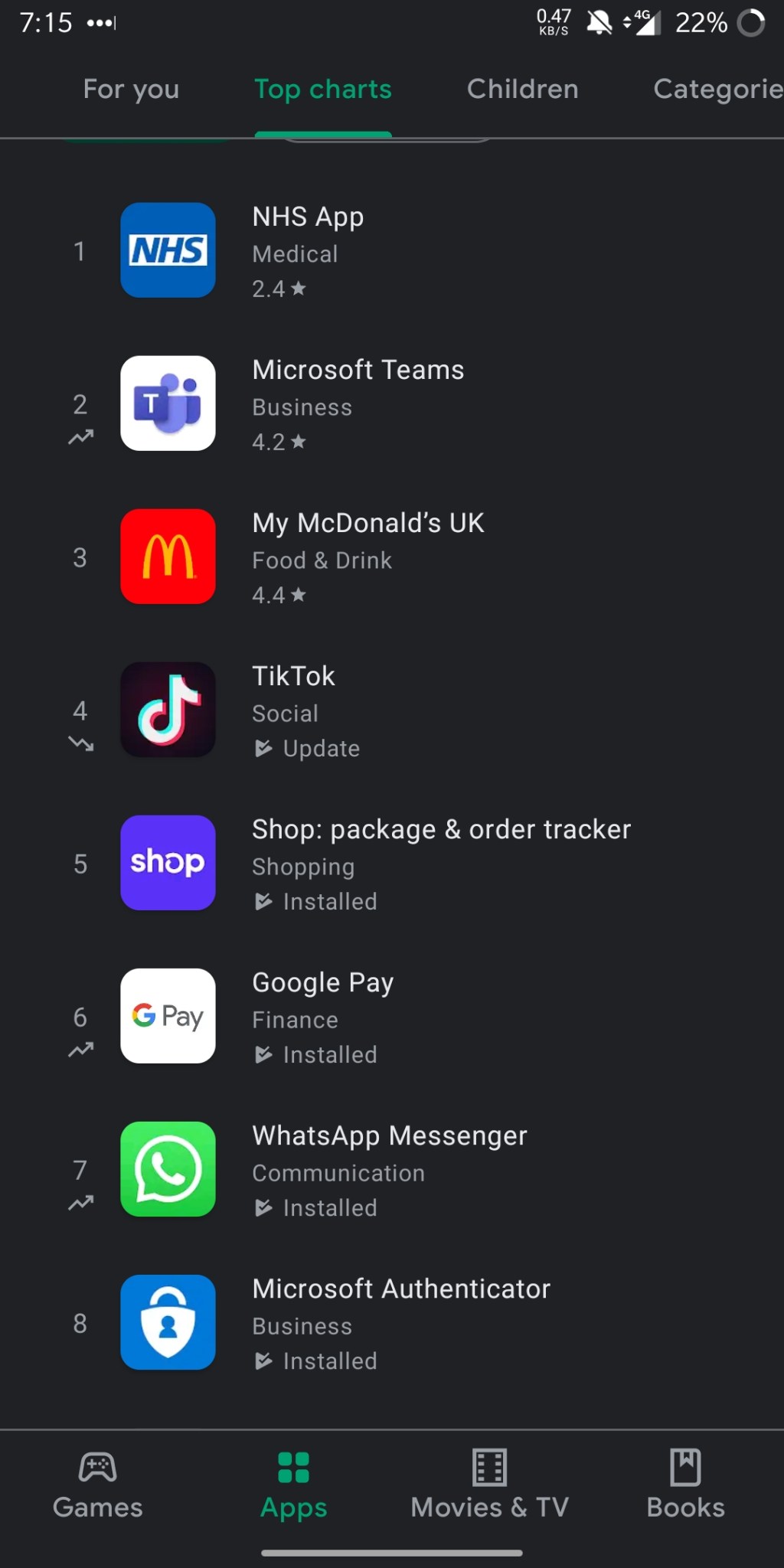
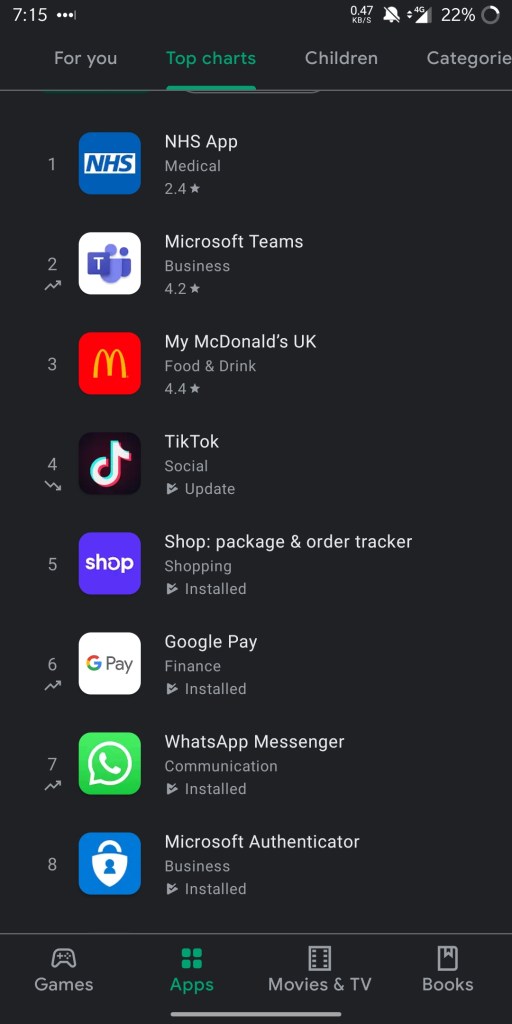
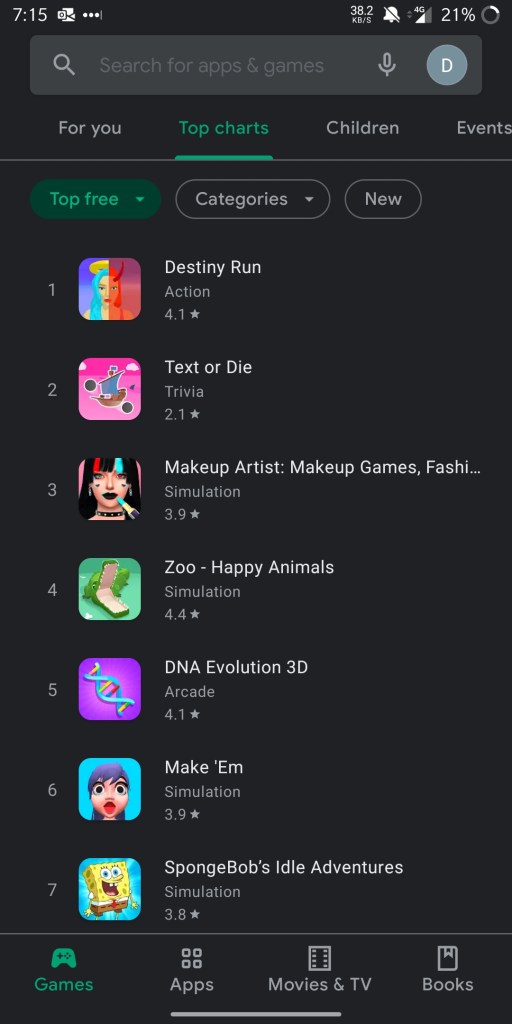
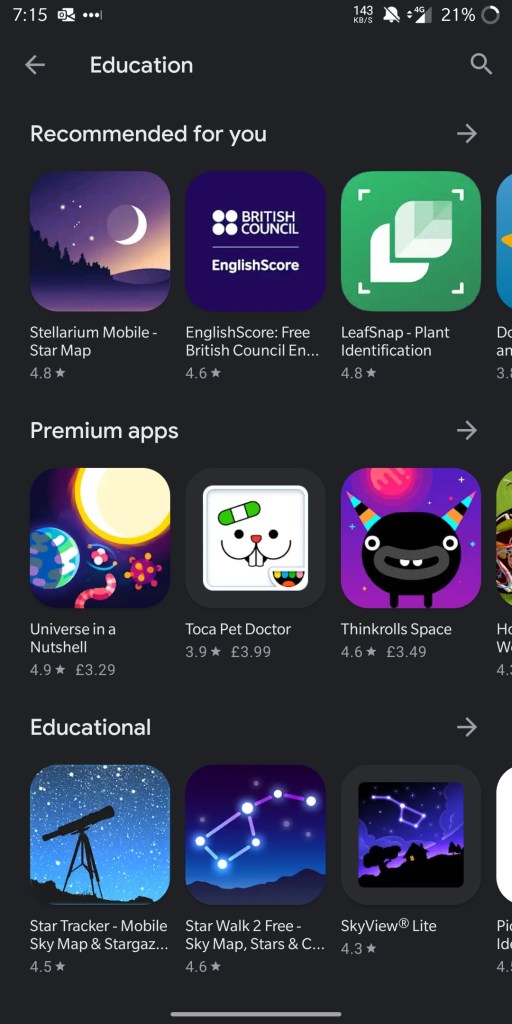
When looking at the most popular application downloads for the last year it is not clear where Microsoft will be able to define a value add for customers who install an Android app to their Windows PC in any of these categories.
Can we make a case that using any of the applications on the lists below will be desirable or even work in a manner that makes them useful at all?
Social media services all have web sites / clients that must surely deliver a better experience than an emulated app at the bottom of your screen? Perhaps there is a case to be made for “viewer” apps such as TikTok and Instagram where the content is designed around the format of the screen in a way that means the web versions are filled with white space.
Banking and Financial services apps all make use of biometrics as part of their security, and it is unlikely many will support input from a non native operating system. I could be wrong about this. It depends on how transparent the Android sub system is to the applications it supports.
Games could be a mixed bag depending on how well touch commands are translated to mouse and keyboard. For those with a touchscreen laptop or tablet this wont be an issue but the majority of users will use a mouse and keyboard. Again surely the majority of users will simply pick up their phones.
Conclusion
It is hard to see that from what we know about how consumers use devices that this will take off in any meaningful way, outside of enthusiast circles, so why do this? There are the potential financial benefits of course and these should not be overlooked. Microsoft is a business like any other and all of their actions and developments should be looked at through that lens. Are they hoping that, over time as more users switch to Windows 11 that Android developers will look at Windows as a second platform for their wares? Are they simply aping Apple in their support of IOS apps on MacOS. Or does Microsoft feel this helps them close the app gap which helps them better compete in the tablet space? Or perhaps support for Android helps to build a better argument for future “touch first” foldable Windows devices?
There are many more questions, which until the first preview of this feature is released, will remain unanswered so for now I remain sceptical at best. But none the less intrigued!
 Twice the bits
Leave a comment